 PrimeLuck Arts
© Lucky Maingi. All rights reserved. Use of the artwork image requires the copyright holder's permission.
Spirituality, psychology and art
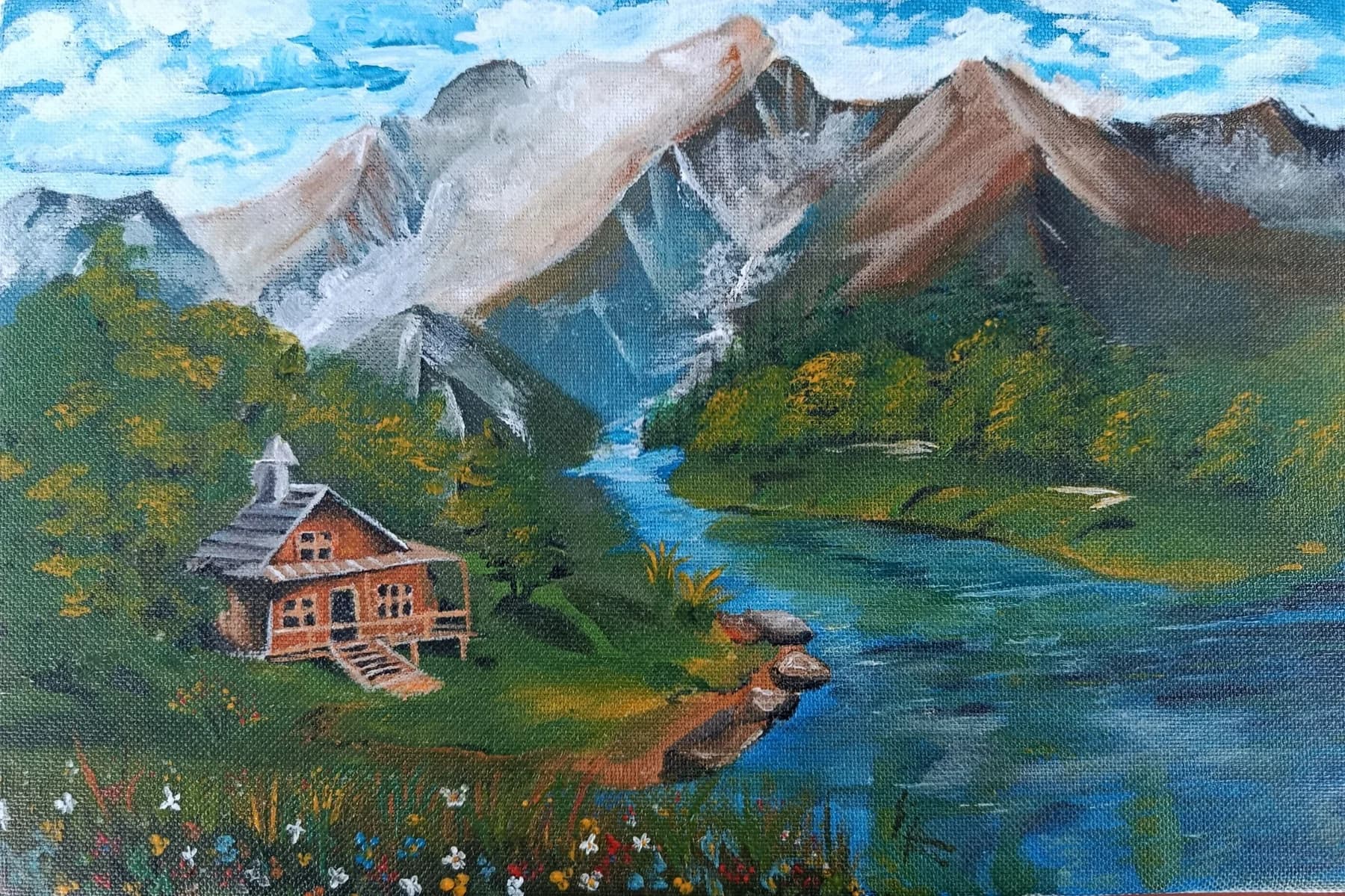
The Quiet Haven
Lucky Maingi, Acrylic on canvas, A3, 42 x 29.7 cm
KES 7,000
We arrange payment by M-Pesa and collection or delivery on WhatsApp.
An expressive acrylic landscape exploring nature as a metaphor for inner peace, belonging and spiritual connection. Snow-capped mountains, a winding turquoise river and a secluded cabin form a tranquil setting that invites reflection on the relationship between our external environment and inner world.
- Artist
- Lucky Maingi
- Medium
- Acrylic on canvas
- Dimensions
- A3, 42 x 29.7 cm
- Orientation
- Landscape
- Price
- KES 7,000
- Focus
- Spirituality, psychology and art
Artist's statement
My artistic practice explores the intersection of spirituality, psychology and art. I am interested in how visual expression can communicate inner experiences, invite self-reflection and deepen our understanding of the human condition.
Through my work, I seek to create more than images to be observed. I aim to create spaces for contemplation: spaces in which colour, form, symbolism and atmosphere encourage viewers to engage with their own emotions, beliefs and interpretations of life.
In The Quiet Haven, the natural landscape becomes a point of departure for exploring the inner landscape of human experience. The mountains, flowing river and secluded cabin invite reflection on stability, change, refuge and belonging.
My intention is to leave room for individual interpretation, allowing each viewer to discover a personal connection with the work.
Curatorial note
In The Quiet Haven, the landscape becomes a metaphor for the inner life.
The mountains suggest stability and perspective. The river evokes the continual flow of thought, emotion and experience. The cabin introduces the idea of refuge: a place where the individual can withdraw from external demands and encounter a more personal sense of belonging.
From a psychological perspective, the painting may evoke emotional restoration, solitude and the importance of reflective space. Spiritually, its expansive scenery may inspire wonder, connection and reverence for the natural world.
These interpretations remain open rather than prescriptive. The painting does not dictate what peace should mean; it invites each viewer to discover what it means to them.
Through this meeting of landscape, symbolism and personal interpretation, The Quiet Haven becomes an invitation to explore the relationship between the world we inhabit and the world we carry within us.